
The UK was in shock momentarily when Theresa May, the British Conservative Prime Minister, announced a snap general election to take place on June 8th this year. For the last six months she had categorically ruled out another election, but she changed her mind in a dramatic fashion. It could turn out to be a political master stroke, so far
Tag: Markets & Trade
In March 2017, The ICO Composite Indicator Price Fell Slightly
According to ICO , market weakens further due to high exports and increasing inventory levels. In March 2017, the ICO composite indicator price fell slightly. While Robustas remained broadly stable, Arabica prices were under pressure. The monthly average of the composite indicator was down by 2.6% to 134.07 US cents/lb in March from 137.68 US cents/lb recorded in February. The
Coffee Shop Culture in Australia
‘In Australia, coffee isn’t fuel for work – it’s a way of life’. Milkman (2016).
While coffee may be a global commodity, and coffee shop cultures have emerged across the world, each country tends to have its own flavour of coffee shop culture, each with their own histories, influenced by the movement of people and commodities around the globe. A particularly interesting case is Australia, described as the world’s ‘coffee capital’ by Perfect Daily Grind, which has a well-established coffee shop culture where the independent coffee shop dominates the landscape. It has been argued that Australian coffee culture has now achieved an important status representing “time out” warmth, intimacy and sophistication, with baristas representing cultural icons [Sign in to continue]
Some Coffee Festivals in 2017
Coffee lovers will be delighted this year, as there are many coffee festivals and exhibitions coming up in 2017. In the infographic created by Market Inspector, you can a list of coffee festivals happening all over the world, so there’s something for everyone. Some of these fests are open to the coffee and tea industry professionals. The other festivals also
European Coffee Market Sales Increase in 2016
Preliminary results on the European coffee markets show that the consumption in EU28 increased by 6.4% in quantity in the twelve months ending November 2016.
The CoffeeBi analysis highlights that this result is due to the overall increase in coffee sales in the second part of 2016. In the first six months, consumption in EU28 stood at +1% (compared to 1st semester 2015).[Sign in to continue]
CoffeeBI Celebrates Its First Anniversary

CoffeeBI celebrated its first anniversary on January 1st. It’s an important milestone for us, remembering that we started 12 months ago, and have continued thanks to the passion of a very small team. Now we are proud to be able to celebrate the loyalty of a tireless team of worldwide reporters, expert consultants, and clients who favoured and stuck with us.
Christmas Planning for Independent Coffee Shops

The well oiled seasonal retail calendar drives sales throughout the year, and in many markets, Christmas is the biggest of them all. It’s not always a great trading period for everyone, though. Those coffee shops that are in city centres or shopping malls that attract the hoards are planning their big trading days, stocking up, staffing up and getting ready
Korea: The Coffee Republic
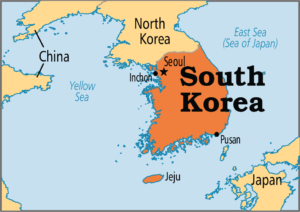
Everyone, I suppose, knows the song “Gangnam style” the K-pop single by the South Korean rapper Psy that on December 2012 became the first YouTube video to reach one billion views. Well, this song satirized “a classy girl who know how to enjoy the freedom of a cup of coffee”. In these words, all what is going on in South Korea: Coffee has become a powerful indicator of class status symbol. Moreover, coffee is the number one beverage in the country (53% of the total drink market) and has even surpassed the demand for “kimchi”, South Korea’s national dish (according to a study by the International Business Times).
On average, the study showed, South Koreans drink coffee 12.2 times per week; they eat “kimchi”, a mix of fermented vegetables that has been a part of the Korean diet since the 1500s, 11.9 times per week and white rice only 6.9 times per week. To drink a fresh bean coffee is not always cheap. In Seoul, a “cup of Joe (COJ)” is more expensive than in the U.S. (about $3.80 against $2.25 on average).[Sign in to continue]
CoffeeBI becomes an SCAE member

Since September 2016 and less than 1 year from its launch, CoffeeBI has become an SCAE (Speciality Coffee Association) member, a sign of a gradual but fast growth of our project in the coffee industry. This is an important stage that shows our commitment in being closer the players of the coffee industry in order to help them manage every problem
Winking in the Dark
One of the biggest dilemmas or even traps the Independent Coffee Shop owner faces is getting themselves away from the day to day operation. There can be many reasons for this, sometimes the overriding pride or passion leads the owners to believe that only they can serve the customers properly, resulting in that well know disease ‘presenteeism’. The symptoms are