Tag: Coffee Culture

Coffee Culture and Specialty Coffee in the Middle East

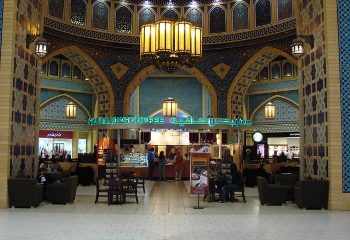
Middle-East-Coffee-Shops

Last month, Trade Arabia announced that Coffee Planet, a coffee roaster and coffee shop chain in the Middle East, signed a franchise agreement with HB Brands for 70 shops in Saudi Arabia. Coffee Planet, based in Dubai, embarked on the franchise concept in order to expand its global presence, adding to its existing franchise agreements in UAE, Qatar, Pakistan and Malaysia.

There are changes taking place in Middle Eastern coffee culture [Sign in to continue]

Exploring Coffee and Cafe Culture in Portugal

Coffee culture is ingrained in the everyday life, culture and history of Portugal. The Portuguese were crucial actors in expanding the coffee industry into what it is today with Portuguese colonists introducing the coffee plant to Brazil. There isn’t space here to explore the rich history of Portuguese coffee culture, but I will write about this more at some point soon.

Drinking coffee in Portugal is an everyday part of life, with cafés found almost on every street, and espresso being the most common drink.  Coffee is significantly cheaper to drink out of the home, than it is in the UK. An espresso wouldn’t usually cost you more than € 1 and in most cases is closer to € 0.50. If you ask for a coffee (um café) an espresso is what you’d be served, although there are regional variations for different coffees too. If you were in Porto and wanted an espresso you’d order um bica, while in Lisbon you’d order um cimbalino (named after the La Cimbali espresso machines). [Sign in to continue]

Coffee Shop Culture in Australia

‘In Australia, coffee isn’t fuel for work – it’s a way of life’.  Milkman (2016).

While coffee may be a global commodity, and coffee shop cultures have emerged across the world, each country tends to have its own flavour of coffee shop culture, each with their own histories, influenced by the movement of people and commodities around the globe. A particularly interesting case is Australia, described as the world’s ‘coffee capital’ by Perfect Daily Grind, which has a well-established coffee shop culture where the independent coffee shop dominates the landscape.  It has been argued that Australian coffee culture has now achieved an important status representing “time out” warmth, intimacy and sophistication, with baristas representing cultural icons [Sign in to continue]

Exploring Coffee Shop Culture in Russia

Russia is a country more frequently associated with a tea drinking culture which dates back hundreds of years. While the hot drinks market in Russia is still dominated by tea, the consumption of coffee is one the rise, with the consumption of fresh coffee being the main driver (ICO, 2015).  The coffee market was valued at around $2.5 billion in 2014 compared to around $4 billion for tea (USDA 2014).

‘Specialty coffee is new in Russia; until just 20 years ago, any form of coffee had been considered a luxury reserved for the elite and was far beyond the reach of average consumers. Today, half of all coffee consumed is still soluble (instant) coffee, making it one of the biggest markets for Nescafe in the world. The other half of is a hodgepodge of commodity and specialty coffee’ [Sign in to continue]

Korea: The Coffee Republic

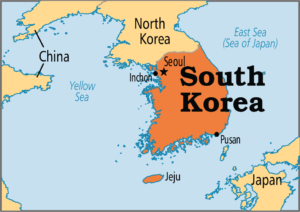
Korea-300x212

Everyone, I suppose, knows the song “Gangnam style” the K-pop single by the South Korean rapper Psy that on December 2012 became the first YouTube video to reach one billion views. Well, this song satirized “a classy girl who know how to enjoy the freedom of a cup of coffee”. In these words, all what is going on in South Korea: Coffee has become a powerful indicator of class status symbol. Moreover, coffee is the number one beverage in the country (53% of the total drink market) and has even surpassed the demand for “kimchi”, South Korea’s national dish (according to a study by the International Business Times).

On average, the study showed, South Koreans drink coffee 12.2 times per week; they eat “kimchi”, a mix of fermented vegetables that has been a part of the Korean diet since the 1500s, 11.9 times per week and white rice only 6.9 times per week. To drink a fresh bean coffee is not always cheap. In Seoul, a “cup of Joe (COJ)” is more expensive than in the U.S. (about $3.80 against $2.25 on average).[Sign in to continue]