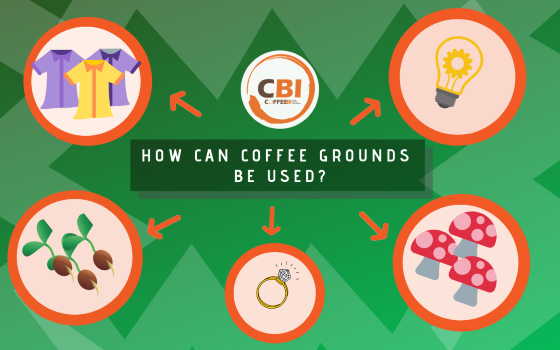
How can coffee grounds be used? 5 ways to engage the coffee industry in the circular economy by thinking about what happens to a key waste product.
Future grounds: How coffee grounds can be used in the circular economy

Data Intelligence for the coffee industry
How can coffee grounds be used? 5 ways to engage the coffee industry in the circular economy by thinking about what happens to a key waste product.
It’s important to rethink the way that coffee residue is handled, by looking at both the environmental and economic benefits that can be developed. The first step towards doing so is by tackling the problem at the early stages of coffee production.
Think about how we order meals, find a hotel, suggest a restaurant to friends, even how we take a coffee in some coffee shops, where we can skip the queue with a smartphone app. Our everyday consumer world has been disrupted beyond recognition. Again, look at consumers’ behaviour over the last few years and how they have embraced immediate communication and

The Boston Consulting Group (BCG) reveals that in 10 years we will be facing the worst global workforce crisis, due to the lack of skilled people in developed countries. The BCG is a global management consulting firm with over 80 offices around the world, who, in 2013, undertook a global survey of two hundred thousand job seekers in 189 countries
Last month, Jennifer Ferreira, a researcher in the Centre for Business in Society at Coventry University and Opinion Leader at CoffeeBI, gave a guest lecture at Leiden University in the Netherlands to talk about the coffee shop industry, recycling and the circular economy. The lecture focused on exploring the implications of the rapid growth of the coffee shop industry for
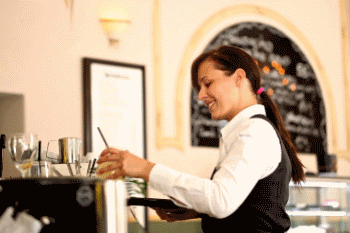
People management is vital to staff retention Happily, the choleric chef turning tantrums in the kitchen and never communicating with his minions at less than 100 decibels, is one of a disappearing race. Yet the widely held belief still exists that the key to becoming a “proper” chef is learning the hard way and taking lots of knocks. Participants of
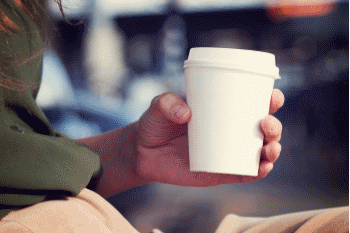
An article on BBC News outlined ‘four solutions to the disposable coffee cup problem’. It re-highlights the scale of the disposable coffee cup problem in the UK – 2.5 billion disposable coffee cups thrown away each year, with only a very small percentage being recycled. The article highlights how many businesses have engaged in collection and recycling schemes, but also lists four
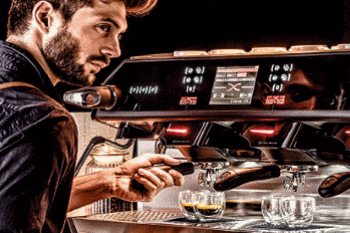
The topic of digitalisation is more topical than ever – this applies to gastronomy and the hotel sector as well as other industries. But what exactly is digitalisation in the hospitality sector, and how can digital solutions be implemented so that not only the manager but also the employees are behind it? A topic that experts and journalists discussed at
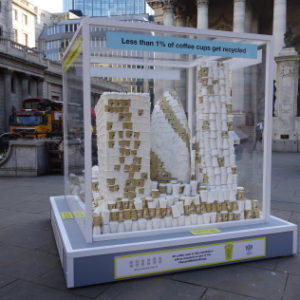
The phenomenal growth of coffee shops (in the UK, but also globally) has consequently meant a rise in energy consumption and the production of waste. It’s estimated that 500,000 tonnes of coffee waste is produced in the UK each year, and 7 million disposable coffee cups each day. It is estimated that less than 1% of these coffee cups are recycled. After the issue reached the mainstream media last year as part of Hugh Fearnley Whittingstall’s ‘war on waste’ there have been many developments.
One of the most common ways in which coffee shops engage in the circular economy is [Sign in to continue]
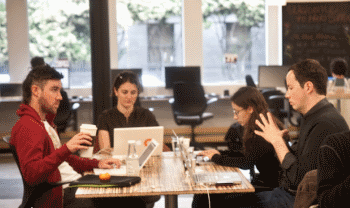
This is a new piece of research which highlights another important function of café spaces – as places not only of co-working for independent workers, but as places where business and work takes place more generally.
The discount voucher website MyVoucherCodes has recently released some data which suggests that:
4/5 people in the UK have spent at least 3 ½ hours working from a coffee shop each week;
1/3 have closed a business deal (with an average value of [sign in to continue]